
Something remarkable is happening in living rooms around the world. Quietly, steadily, and in growing numbers, households are unplugging from their cable boxes, canceling their satellite subscriptions, and refusing to continue paying hundreds of dollars every month for a service they increasingly find overpriced, overloaded with content they never watch, and simply not worth the money.
The numbers tell a striking story. By the end of 2026, an estimated 80.7 million households in the United States alone will have cut the cord on traditional pay TV — more than double the 37.3 million who had done so in 2018. For the first time in television history, non-pay-TV households now outnumber traditional cable subscribers, and the gap widens with every passing quarter. Meanwhile, streaming captured 47.5% of all television viewing time in late 2025, a record high, while cable’s share dropped to just 20.2% — its lowest ever recorded.
The financial motivation is clear. The average monthly cable bill in the United States has climbed to well over $100, with some estimates placing it as high as $217 per month when bundled services and equipment rental fees are factored in. That is more than most households spend on electricity. When consumers began doing the math — realizing they were paying over $2,000 per year for a bundle of 300 channels when they regularly watch only a handful — the decision to cancel became unavoidable for millions.
But cutting the cord raises an immediate and practical question: what do you watch instead? Streaming services have emerged as part of the answer, but the average household now subscribes to nearly 4.4 streaming platforms, and those costs add up quickly too. There is, however, another solution — one that does not require subscriptions, internet plans, or any recurring payment of any kind. That solution is over-the-air television, and WaveMax Antenna is one of the most capable and accessible tools for accessing it.
This article is not a simple product review. It is a comprehensive guide to understanding why WaveMax Antenna matters, how it fits into the modern household, and why it has become one of the most talked-about pieces of home entertainment technology in 2026. Whether you are in the process of cutting the cord or simply looking to reduce your monthly entertainment expenses, this guide gives you everything you need to know.
Introducing WaveMax Antenna: Free Television Reimagined
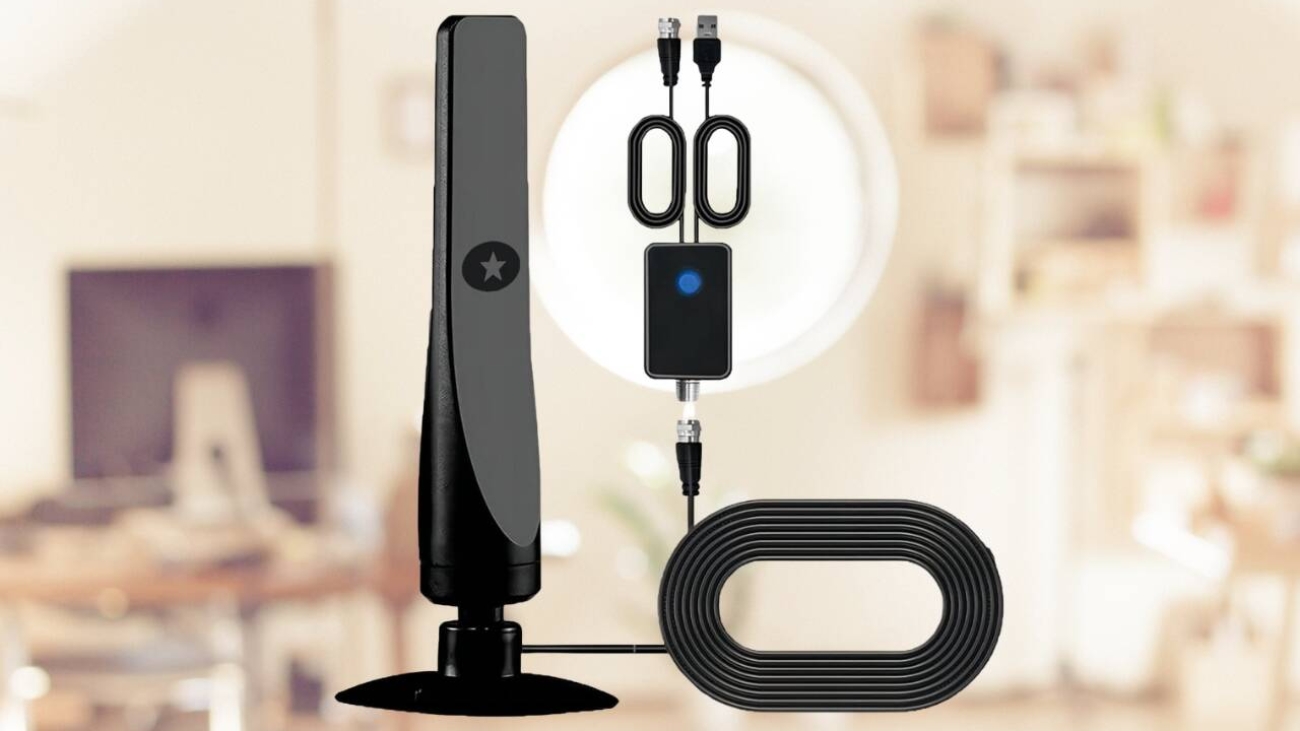
WaveMax Antenna is a compact, indoor HDTV antenna engineered to receive free over-the-air digital broadcast signals and deliver them to your television in high definition. It is small enough to fit in your palm, discreet enough to hide behind a flat-screen TV, and powerful enough to pull in signals from broadcast towers up to 120 miles away.
At its core, WaveMax exists to solve a problem that is both financially significant and practically simple: major broadcast television channels are legally, freely available to anyone with an antenna, yet most people have been paying cable companies for decades to access those very same channels. WaveMax removes the middleman entirely.
The product has earned attention not just for what it does, but for how well it does it. With over 8,000 verified customer reviews, a reported average rating of 4.7 stars, and recognition from independent review platforms as one of the top-performing TV antennas of 2024 and 2025, WaveMax has established a track record that goes beyond marketing language. Thousands of real users — from suburban families and urban apartment dwellers to rural retirees and full-time RV travelers — have tested this device in real-world conditions and come back with largely the same conclusion: it works, it is simple, and it saves money.
What makes WaveMax particularly relevant in 2026 is timing. The convergence of rising cable costs, streaming subscription fatigue, and growing public awareness of free OTA broadcasting has created the ideal environment for a product like WaveMax to resonate with a mainstream audience. It is not a niche gadget for tech enthusiasts. It is a practical tool for anyone who watches television and pays too much to do so.
The Science Behind WaveMax: How Over-the-Air Broadcasting Works
To fully appreciate what WaveMax Antenna delivers, it helps to understand the infrastructure it taps into. Over-the-air television broadcasting is not a new technology — it is the original form of television transmission, predating cable by decades. What has changed dramatically in recent years is the quality of those broadcasts.
When the United States and most other developed nations transitioned from analog to digital broadcasting in the late 2000s, the quality of OTA signals improved enormously. Digital television transmissions support full high-definition resolution — 720p, 1080i, and 1080p — and in some cases even 4K content. Because digital signals either come in clearly or not at all (unlike analog signals, which could be fuzzy or snowy), the viewing experience from a well-placed antenna can actually exceed what cable subscribers receive after signal compression.
Broadcast stations transmit on specific radio frequency bands — VHF (Very High Frequency) in the 54–216 MHz range and UHF (Ultra High Frequency) in the 470–890 MHz range. These signals travel outward from transmitting towers in all directions, and any compatible antenna within range can receive them at zero cost to the viewer.
WaveMax Antenna is engineered to capture both VHF and UHF frequency bands simultaneously, using a multi-directional reception design that pulls in signals from multiple towers at once. Its integrated signal amplifier boosts incoming signals before they reach your TV’s tuner, compensating for distance and interference. The result is a device that captures more channels, holds signals more reliably, and delivers cleaner picture output than passive antennas operating without amplification.
The entire system is passive from the viewer’s perspective. There is no account to create, no login to manage, no bandwidth to consume. The signals exist in the air around you at all times. WaveMax simply gives your television the ability to receive them.
WaveMax Antenna Technical Specifications
Understanding the technical profile of WaveMax helps set appropriate expectations and makes it easier to compare against other products.
| Specification | Detail |
|---|---|
| Antenna Type | Indoor amplified digital HDTV antenna |
| Signal Range | Up to 120 miles (optimal conditions) |
| Frequency Support | VHF (174–240 MHz) and UHF (470–862 MHz) |
| Resolution Support | 720p, 1080i, 1080p, 4K compatible |
| Signal Direction | 360-degree multi-directional reception |
| Amplifier | Built-in smart signal booster |
| Cable Length | 20-foot premium coaxial cable included |
| Power | USB-powered amplifier (USB port or adapter) |
| Connector Type | Standard coaxial (F-type) with adapter |
| TV Compatibility | All TVs with built-in digital tuner; older TVs with converter box |
| Dimensions | Compact — approximately 60 x 150 mm |
| Weight | Under 1 lb |
| Broadcast Standards | ATSC (North America), DVB-T2 (Europe, Australia) |
These specifications confirm that WaveMax is a full-featured amplified indoor antenna with broad compatibility across TV brands, countries, and broadcast standards. The 20-foot coaxial cable is notably generous, giving users significant flexibility in where they place the antenna relative to their television.
Eight Reasons WaveMax Antenna Is Trending in 2026
1. Subscription Fatigue Is Real and Growing
The average household now pays for multiple streaming services simultaneously, with many reporting that the combined cost rivals or exceeds their former cable bill. WaveMax addresses the live, broadcast television piece of the entertainment puzzle with a one-time payment, eliminating one recurring cost entirely from the monthly budget.
2. Live Television Is the Last Stronghold
For all the content available on streaming platforms, live television — breaking news, live sports on broadcast networks, local weather, election coverage, award shows — remains something that streaming services cannot fully replicate. WaveMax delivers all of this in real time, live, in HD, at no ongoing cost.
3. The Broadcast Signal Network Has Never Been Stronger
In 2026, the over-the-air broadcast infrastructure in major markets is more robust than ever. New transmitting towers, upgraded equipment, and the ongoing rollout of ATSC 3.0 (the next-generation broadcast standard) are expanding coverage, improving signal quality, and introducing features like targeted local content, enhanced audio, and emergency alert integration. WaveMax users benefit from these infrastructure improvements automatically.
4. No Internet Required
Unlike streaming services that depend on fast, reliable broadband, WaveMax operates entirely independently of internet connectivity. For households in areas with limited or expensive internet access, or for users who simply do not want to consume data watching television, this independence is a significant advantage.
5. The Setup Takes Less Time Than This Paragraph Takes to Read
Three steps: plug the coaxial cable into your TV, position the antenna, scan for channels. That is the entire installation process. No technician visit, no waiting for equipment to arrive, no account setup, no configuration menus. The simplicity of WaveMax is one of the most consistently praised aspects of the product across all verified customer reviews.
6. It Works Everywhere You Take It
WaveMax is portable by design. At under one pound and compact enough to fit in a laptop bag, it can be taken from room to room, carried to a vacation property, packed into an RV, or set up in a hotel room anywhere that broadcast signals are available. This portability adds enormous practical value beyond simple home use.
7. Picture Quality That Surprises First-Time Users
Many first-time antenna users are astonished to discover that OTA broadcast television in 1080p can look significantly better than the same content received via cable, which undergoes digital compression during transmission. Because WaveMax receives the uncompressed broadcast signal directly, pictures are sharper, colors are more accurate, and motion is smoother on many channels.
8. The Financial Case Is Impossible to Ignore
At a one-time cost of under $40 — less than a single month of basic cable — WaveMax eliminates one category of recurring TV expense permanently. Over a five-year period, a household that previously paid $120 per month for cable and switches to a combination of WaveMax and one or two selective streaming services could save well over $5,000. The financial mathematics are straightforward and compelling.
A Room-by-Room Guide to Using WaveMax in Your Home
One of the advantages of WaveMax’s portability and simple setup is that it can be deployed across multiple rooms in the same household — either with a single unit moved between rooms or with multiple units purchased through bundle packages.
Living Room
The living room is where most primary television viewing happens, and WaveMax performs best here. For optimal results, position the antenna near a window on a wall that faces the general direction of the nearest broadcast towers. A 20-foot coaxial cable allows placement well away from the TV itself, giving flexibility to find the signal-strongest location in the room.
Bedroom
Secondary bedroom TVs are a common source of cable bill inflation — cable companies often charge per-room fees or require additional set-top boxes. WaveMax eliminates this cost entirely. A single unit in the bedroom, placed on a windowsill or mounted near the ceiling, typically receives the full available channel lineup.
Kitchen
Kitchen televisions are popular for morning news, cooking shows, and background entertainment during meal preparation. WaveMax’s compact footprint means it can sit unobtrusively near a kitchen television without cluttering counter space.
Home Office
For home workers who like to have news or broadcast content running in the background, a WaveMax in the home office provides live broadcast access without adding to streaming data consumption or requiring an additional subscription.
Children’s Room
Parents who want their children to have access to educational broadcast content — including PBS Kids and similar free educational programming — can set up WaveMax in a child’s room knowing it provides only free, publicly regulated broadcast content with no risk of subscription fees or uncontrolled access to streaming platforms.
Garage or Workshop
Many people keep a TV in a garage or workshop for news and entertainment while working. WaveMax is ideal for this use case — its durability, simple setup, and low cost make it a natural fit for secondary spaces.
WaveMax Antenna for Travelers, RV Owners, and Renters
WaveMax has found a particularly enthusiastic audience among three groups whose television needs are not well served by traditional cable or satellite: travelers, RV owners, and renters.
Travelers and Holiday Homeowners
For households with vacation homes or short-term rental properties, paying for a full cable subscription at a secondary property is expensive and often wasteful — the property may be occupied for only weeks or months out of the year. WaveMax provides full broadcast television access at the vacation property for a one-time cost, with no monthly fees accumulating during the months the property sits empty.
RV and Camper Van Owners
The RV lifestyle presents particular television challenges. Satellite dishes are expensive, require alignment, and are impractical in areas with tree cover. Streaming services require reliable cellular data, which is not always available on the road. WaveMax provides a practical middle path: a lightweight, portable antenna that receives local broadcast signals in whatever area the RV is currently located. Major network affiliates exist in virtually every region of the country, meaning WaveMax users can tune into local news and weather wherever they park.
Renters and Apartment Dwellers
Renters face restrictions that homeowners do not — landlords may prohibit satellite dish installation or require deposits for cable setup. WaveMax requires no installation, no drilling, no landlord permission, and leaves no trace when a tenant moves out. For urban renters in particular, where broadcast towers are typically close and signal strength is excellent, WaveMax is often the single best-performing free TV option available.
How Much Money Can You Actually Save With WaveMax?
The financial case for WaveMax is compelling, but the actual savings depend on what your current TV setup costs and what you replace it with. Here is a realistic breakdown across several common household scenarios.
Scenario A: Canceling Cable Entirely and Replacing with WaveMax + One Streaming Service
- Former cable bill: $120/month ($1,440/year)
- WaveMax one-time cost: $40
- One streaming service (e.g., a major platform at $15/month): $180/year
- Total annual cost after switch: $220
- Annual savings: approximately $1,220
- Five-year savings: approximately $6,060 (accounting for WaveMax’s one-time cost)
Scenario B: Replacing a Satellite Subscription in a Rural Household
- Former satellite bill: $100/month ($1,200/year)
- WaveMax one-time cost: $40
- Two streaming services for variety: $360/year
- Total annual cost after switch: $400
- Annual savings: approximately $800
Scenario C: Adding WaveMax as a Supplement to Existing Streaming Services
For households that have already cut cable but rely entirely on streaming for live content:
- Adding WaveMax provides free live news, sports, weather, and major network programming
- No additional monthly cost
- Reduces streaming dependency for live content
- Effective saving: variable, but eliminates need for live TV streaming add-ons that can cost $40–$80/month
Scenario D: Multi-Unit Bundle for a Large Home
- Three-unit bundle cost: approximately $80–$100 (with bundle discount)
- Replaces three per-room cable boxes at approximately $10–$20/month each
- Annual savings on equipment rental fees alone: $360–$720
The common thread across all scenarios is that WaveMax’s one-time cost structure creates savings that compound over time. Unlike subscriptions that reset every month, WaveMax’s cost is paid once and done.
The Channel Guide: What You Can Watch for Free
The variety of content available through WaveMax surprises many first-time users who expect free television to mean limited television. In reality, the broadcast network lineup in major markets is extensive and covers most of the most-watched content categories.
News
All major national broadcast networks operate 24-hour news operations accessible through their affiliated stations. Local affiliates also provide local news coverage multiple times daily, including morning broadcasts, evening news, and late-night news programs. Weather coverage, emergency alerts, and breaking news all arrive instantly through WaveMax with no buffering, no internet dependency, and no delay.
Sports
Major sports events — NFL games on NBC, CBS, ABC, and FOX; college football and basketball; golf majors; tennis Grand Slams; the Olympics; World Series baseball; and more — are broadcast on free networks accessible through WaveMax. For sports fans, this is one of the most compelling arguments for the product: many of the most-watched sporting events in the world are available completely free through OTA broadcasts.
Entertainment
Prime-time dramas, comedies, reality shows, and competition programs from the major networks are all available. In addition, sub-channels carried by many local affiliates — including MeTV (classic television), Comet (science fiction), Laff (comedy), Bounce TV, and Ion Television — add dozens of additional viewing options beyond the main network feeds.
Children’s Programming
PBS and its affiliated sub-channels provide extensive, award-winning educational programming for children. Cartoon Network affiliates and other youth-focused broadcast channels are also available in many markets, giving families a rich free resource for child-appropriate content.
Movies and Classics
Many sub-channels broadcast feature films continuously, including classic Hollywood cinema, contemporary releases that have entered broadcast licensing, and genre-specific content. For viewers who enjoy older films and television, the sub-channel ecosystem available through OTA broadcasting is remarkably deep.
Local Content
Local affiliate programming — area sports coverage, community events, local government proceedings, regional weather — is available exclusively through over-the-air broadcasts. This hyperlocal content is something that no streaming service can replicate and is one of the most genuinely unique advantages of WaveMax.
WaveMax Setup Masterclass: Getting the Best Signal Every Time
WaveMax’s three-step setup is genuinely simple, but understanding a few additional principles can help you achieve the best possible signal quality from day one. Think of this as the expert-level version of the basic setup guide.
Understand Your Local Broadcast Landscape
Before positioning your antenna, it helps to know roughly where your local broadcast towers are. Several free online tools (searchable as “OTA broadcast tower locator” for your country) allow you to enter your address and see which towers are within range, what direction they are from your home, and what channels they carry. This knowledge lets you orient the antenna more precisely rather than relying purely on trial and error.
Height Beats Direction
If you can only optimize one variable in your antenna placement, prioritize height. Broadcast signals travel in roughly straight lines from towers, and anything between the antenna and the tower — buildings, trees, hills, interior walls — diminishes signal strength. Placing the antenna as high as possible within the room (upper wall, near ceiling, on top of a bookcase) almost always produces better results than placing it lower down, regardless of direction.
Windows Are Your Friend
Exterior walls with windows provide a natural signal path for broadcast frequencies. Positioning WaveMax near a window — especially one that faces the direction of broadcast towers — consistently outperforms placement away from windows. Glass is highly transparent to the VHF and UHF frequencies used by television broadcasts.
Avoid Signal Competitors
Electronic devices generate electromagnetic fields that can interfere with antenna reception. Microwaves, wireless routers, cordless phones, and large speakers are the most common culprits. Keep WaveMax as far as practical from these devices, and if you notice channels dropping or pixelating, try repositioning the antenna away from nearby electronics before attempting any other fix.
Use the Full Cable Length
WaveMax includes a generous 20-foot coaxial cable for a reason. Do not bunch or coil the cable unnecessarily, and do not position the antenna right next to the TV out of convenience if a better signal location is available elsewhere in the room. The cable exists to give you flexibility — use it.
Rescan After Moving
If you move the antenna even slightly, run a fresh channel scan. Your TV’s channel memory is based on the scan it completed in the antenna’s previous position. A new scan after repositioning often adds channels or improves the signal quality of existing ones.
Seasonal Rescanning
Broadcast signal conditions change seasonally. Atmospheric conditions in summer can actually extend signal range (a phenomenon called tropospheric ducting), while heavy foliage in spring and summer can reduce signals from towers in wooded directions. Rescanning every few months keeps your channel list current and optimized.
WaveMax Antenna Across Different Countries
WaveMax has been marketed across multiple major markets, each with its own digital broadcast standard and channel ecosystem. Here is a country-specific breakdown.
United States
The US operates on the ATSC digital broadcast standard. WaveMax is fully compatible and receives all channels transmitted in this format. Major networks — ABC, NBC, CBS, FOX, PBS, The CW, ION — are available in virtually all markets, with extensive sub-channel options in urban areas. The US has one of the most densely developed OTA broadcast networks in the world, making it an ideal environment for WaveMax performance.
Canada
Canada uses the same ATSC standard as the United States. Canadian users can receive CBC, CTV, Global, City TV, and their regional affiliates, and those near the US border can often also pick up American network affiliates. Coverage density varies by region, with urban centers like Toronto, Vancouver, and Montreal offering extensive channel lineups.
United Kingdom
The UK’s digital terrestrial television system — known as Freeview — operates on the DVB-T2 standard. WaveMax-compatible devices capture BBC One, BBC Two, BBC Three, ITV, Channel 4, Channel 5, and their numerous sub-channels. The UK has near-universal Freeview coverage, making it one of the most antenna-friendly markets in the world.
Germany
Germany uses DVB-T2 for its digital terrestrial broadcasts. Public broadcasters ARD, ZDF, and their regional affiliates are available free of charge via antenna. German users in major cities can access an extensive lineup including Das Erste, ZDF, 3sat, Arte, and multiple regional channels.
Australia
Australia’s free-to-air digital television system transmits on DVB-T2 and provides access to ABC, SBS, Seven Network, Nine Network, and Ten Network, each carrying multiple sub-channels. Australia’s FTA lineup is one of the most comprehensive in the world relative to country size, and WaveMax-compatible antennas perform well in the country’s urban coastal areas where the majority of the population resides.
Comparing WaveMax to Your Current TV Setup
WaveMax vs. Cable Television
Cable television bundles hundreds of channels most viewers never watch and charges for all of them. The average cable bill exceeds $100 per month and typically involves a long-term contract with early termination fees. Equipment rental for set-top boxes adds further cost. WaveMax offers the broadcast channels within that cable bundle — the ones most people actually watch — for a one-time cost with no contract, no equipment rental, and no recurring fees. For viewers whose primary cable viewing is the major broadcast networks, WaveMax replaces cable entirely.
WaveMax vs. Satellite Television
Satellite services like DIRECTV require professional installation, a physical dish mounted to the exterior of the property, a multi-year contract commitment, and monthly fees comparable to or exceeding cable. Signal quality can be affected by adverse weather. WaveMax requires no installation, no exterior hardware, no contract, and performs consistently in most weather conditions. For secondary properties, vacation homes, or any situation where satellite installation is impractical, WaveMax is substantially more convenient and far less expensive.
WaveMax vs. Live TV Streaming Services
Services that stream live television over the internet — virtual multichannel providers — typically cost between $40 and $80 per month and require a reliable high-speed internet connection. They replicate many of the channels available through WaveMax but charge a monthly subscription that renews indefinitely. WaveMax is purchased once. For the broadcast channels that both WaveMax and live TV streaming services carry, WaveMax delivers the same content for a fraction of the long-term cost.
WaveMax vs. Other Indoor Antennas
In its price category, WaveMax differentiates itself through its extended 120-mile signal range, 360-degree signal reception, integrated smart amplifier, Channel Unblocking Technology, and the inclusion of a 20-foot premium coaxial cable. Budget antennas in the $5–$15 range lack amplification and typically operate effectively only within 30–50 miles of broadcast towers. WaveMax covers a wider geographic range and maintains stronger signal lock in challenging environments.
What Real Users Are Saying About WaveMax in 2026
Customer feedback about WaveMax is drawn from thousands of verified purchases and spans a wide range of user profiles, geographic locations, and use cases. The following themes emerge consistently across positive reviews.
Setup experience is the most universally praised aspect of WaveMax. Users across all age groups and technical comfort levels report completing setup in under five minutes without any difficulty. Senior users in particular frequently mention how accessible the installation process is — no technical knowledge required, no complicated menus to navigate.
Picture quality generates enthusiastic responses, especially from users who are experiencing HD OTA broadcasts for the first time. Many report that the picture quality exceeds what they were receiving through their former cable subscription, which is technically consistent with the absence of cable signal compression in OTA broadcasts.
Channel count satisfaction is location-dependent but generally positive. Urban and suburban users regularly report receiving 50 to 80 channels, while those in major metropolitan areas sometimes exceed 100. Even users in smaller markets report satisfaction with the available lineup of major network affiliates.
Value for money is cited in the majority of reviews, with users calculating their monthly savings against the one-time purchase price and expressing satisfaction with how quickly the product pays for itself.
Consumer electronics analyst Arthur McLeod has described WaveMax as “an impressive solution for anyone tired of hefty cable bills but still wants access to high-quality TV,” specifically highlighting its reliable signal range and ease of setup as the product’s defining strengths.
Mixed reviews typically center on signal performance in rural or geographically challenging areas — a limitation inherent to all indoor antennas, not specific to WaveMax. Users in these situations are best served by taking advantage of the 30-day money-back guarantee to test performance in their specific location before committing.
Expert Analysis: Why Indoor Antennas Are Becoming Essential
The resurgence of interest in OTA television and indoor antennas is not an accident. It reflects a fundamental shift in how consumers think about television and how much they are willing to pay for it.
Consumer electronics and media industry experts have noted that the cord-cutting movement has entered a second phase. The first phase, which accelerated from 2015 to 2022, was primarily about the shift from cable to streaming. The second phase, now underway, is about streaming rationalization — the recognition that managing multiple streaming subscriptions can be as expensive and inconvenient as cable, and that consumers need a stable, free foundation for their entertainment consumption.
Over-the-air television serves as that foundation. It delivers the most universally watched content — local news, major network prime-time programming, live sports on broadcast networks, emergency alerts — at zero ongoing cost. Products like WaveMax make this foundation accessible to any household regardless of technical expertise.
Industry analysts have also noted the role of infrastructure investment in making this moment particularly favorable for OTA viewing. The ongoing rollout of ATSC 3.0 — the next generation of the North American digital broadcast standard — will bring internet-protocol features to over-the-air broadcasting, including on-demand content access, targeted local advertising, improved signal robustness, and enhanced emergency services. WaveMax users in markets where ATSC 3.0 rollout is underway stand to benefit from these improvements as the infrastructure matures.
The combination of consumer financial pressure, streaming fatigue, and improving broadcast infrastructure has created conditions in which indoor antennas like WaveMax are not just a nostalgic throwback to pre-cable television — they are a genuinely forward-looking component of a modern, cost-efficient home entertainment setup.
Common Misconceptions About Indoor TV Antennas
A number of persistent myths about indoor antennas prevent some consumers from exploring options like WaveMax. Addressing these misconceptions directly helps potential buyers make more informed decisions.
Myth: Antenna TV means poor picture quality. Reality: Digital OTA broadcasts support full 1080p HD and in some cases 4K resolution. Because broadcast signals are not compressed the way cable signals are, the picture quality from a well-placed antenna often exceeds cable quality.
Myth: Antennas only work near the broadcast tower. Reality: Modern amplified antennas like WaveMax are designed for extended range. With a 120-mile rated range and a built-in amplifier, WaveMax captures signals that simple passive antennas cannot. Suburban and even many rural users regularly receive strong signals.
Myth: You need an outdoor antenna to get good reception. Reality: Indoor antennas work well for the majority of users, particularly in urban and suburban environments. The key variable is placement — a well-positioned indoor antenna near a window often outperforms a poorly positioned outdoor antenna.
Myth: Free TV has very few channels. Reality: In major markets, OTA broadcasting provides access to dozens or even over 100 channels through main network feeds and sub-channels. The sub-channel ecosystem — specialty networks that broadcast 24 hours on secondary frequencies — has expanded dramatically in recent years.
Myth: Antenna TV is not reliable. Reality: Digital OTA signals either come in clearly or do not — there is no in-between degraded state as there was with analog broadcasts. When a signal is received, it is received cleanly. Reliability depends primarily on placement and proximity to towers, both of which can be optimized.
Myth: You need a special TV to use an antenna. Reality: Any television with a built-in digital tuner — which includes virtually all TVs manufactured after 2007 in the US — works with WaveMax directly. Older televisions can use a digital converter box to enable compatibility.
WaveMax Antenna Pricing, Bundles, and Guarantee
WaveMax is sold with transparent, one-time pricing through its official website. No subscription is required after purchase, and no hidden fees apply.
Pricing Structure
Single units are priced in the range of $34.99 to $59.99 depending on current promotional offers. Multi-unit bundles are available with progressively greater per-unit discounts. Current promotions have offered up to 65% off regular retail pricing during limited-time sales events.
Bundle Options
- Single unit — ideal for initial purchase or single-TV households
- Two-unit bundle — for homes with two televisions or for gifting
- Three-unit bundle — the most popular multi-room configuration
- Family pack — four or more units for large homes or multi-generational households
Bundle pricing makes equipping multiple TVs in the same household cost-effective. Given that cable companies typically charge per-room equipment fees, replacing those with WaveMax bundles can represent substantial savings within the first year alone.
30-Day Money-Back Guarantee
WaveMax is backed by a 30-day money-back guarantee, which serves as an important buyer protection particularly for users in rural areas or regions with uncertain broadcast tower coverage. The guarantee allows users to test the product in their specific location before committing, with the ability to return it for a refund if performance does not meet expectations.
Shipping
Free shipping is available on qualifying orders. Check the official WaveMax website for current shipping terms, as these are subject to change based on promotional conditions.
Always verify current pricing, bundle availability, and guarantee terms on the official WaveMax website before purchasing, as offers are updated regularly.
Frequently Asked Questions About WaveMax Antenna
Can I use WaveMax without a cable or internet connection? Yes. WaveMax operates entirely independently of cable, internet, and any network connection. It captures free broadcast signals from the air and delivers them directly to your TV via coaxial cable.
How do I know if WaveMax will work in my area? The best way to know is to check a broadcast tower locator tool for your location online — these free tools show which towers are within range and what channels they carry. The 30-day money-back guarantee also provides a practical way to test the product in your specific location risk-free.
Does WaveMax work during power outages? Yes. Because WaveMax does not require internet or cable infrastructure, it continues to receive broadcast signals during power outages as long as the TV itself has power — for example, through a generator or battery backup. This makes it particularly valuable for emergency news and weather information.
Can I record programs received through WaveMax? WaveMax itself does not include DVR functionality, but it is compatible with external DVR devices that connect via the coaxial port or through a TV with built-in recording features. Several affordable standalone OTA DVR units are available that pair well with WaveMax for users who want to record broadcasts.
Will WaveMax receive local sports on regional networks? WaveMax receives all channels carried by local broadcast affiliates. Regional sports networks that broadcast on premium cable tiers are not accessible via OTA, but major sports events on broadcast networks — NFL, college sports, major golf, tennis, and the Olympics — are available.
How many televisions can one WaveMax unit serve? One WaveMax unit serves one television directly. For households with multiple TVs, multi-unit bundles are available. While signal splitters can theoretically extend one antenna to multiple TVs, this reduces signal strength and is generally not recommended for optimal performance.
Is WaveMax compatible with 4K televisions? Yes. WaveMax can receive 4K broadcast content on 4K-compatible televisions where 4K OTA broadcasts are available. Not all broadcast towers currently transmit in 4K, but the number is growing as ATSC 3.0 infrastructure expands.
What happens if I move to a new address? Simply take your WaveMax with you. At the new location, position it as described, run a new channel scan, and you will receive whatever channels are broadcast in the new area. No account changes, no service transfers, no fees.
Does bad weather affect WaveMax signal quality? Moderate weather has minimal impact on digital OTA signals. Severe electrical storms can cause temporary signal disruption in some areas, but this is typically brief and resolves when conditions improve. WaveMax performs reliably in rain, cold, and typical weather variations.
Where is the best place to buy WaveMax? The official WaveMax website is the recommended purchase source as it ensures access to the full guarantee, current pricing, and bundle options. Authorized retailers may also carry the product.
Final Thoughts: The Smartest TV Decision You Can Make This Year
The television landscape of 2026 is defined by abundance and expense. Content is everywhere, and so are the bills. The average household navigates a complicated patchwork of cable or satellite subscriptions, multiple streaming services, premium add-ons, and equipment fees — spending more collectively on television than previous generations would have considered imaginable, often while complaining that there is nothing on.
WaveMax Antenna cuts through this complexity with elegant simplicity. It does one thing exceptionally well: it gives you free access to broadcast television in high definition, permanently, with no strings attached. It does not pretend to replace every streaming service or provide every channel that cable offers. It offers something more straightforwardly valuable — a free, reliable foundation for television viewing that costs nothing beyond the purchase price and works anywhere in the country.
The financial case is airtight. The setup is genuinely simple. The picture quality surprises people who expect free to mean low quality. The portability adds use cases that fixed cable or satellite cannot serve. And the 30-day guarantee removes the purchase risk that would otherwise give cautious buyers pause.
For families trying to bring monthly expenses under control, for individuals who are cable-free and want a live TV supplement, for travelers and RV owners who need portable entertainment, for renters who want a no-commitment television solution, and for anyone who has looked at their cable bill recently and felt the frustration of paying too much for too little — WaveMax Antenna is one of the most practical and financially sound purchases you can make.
The cable companies have had their run. WaveMax is the quiet, capable alternative that has been waiting for exactly this moment.