
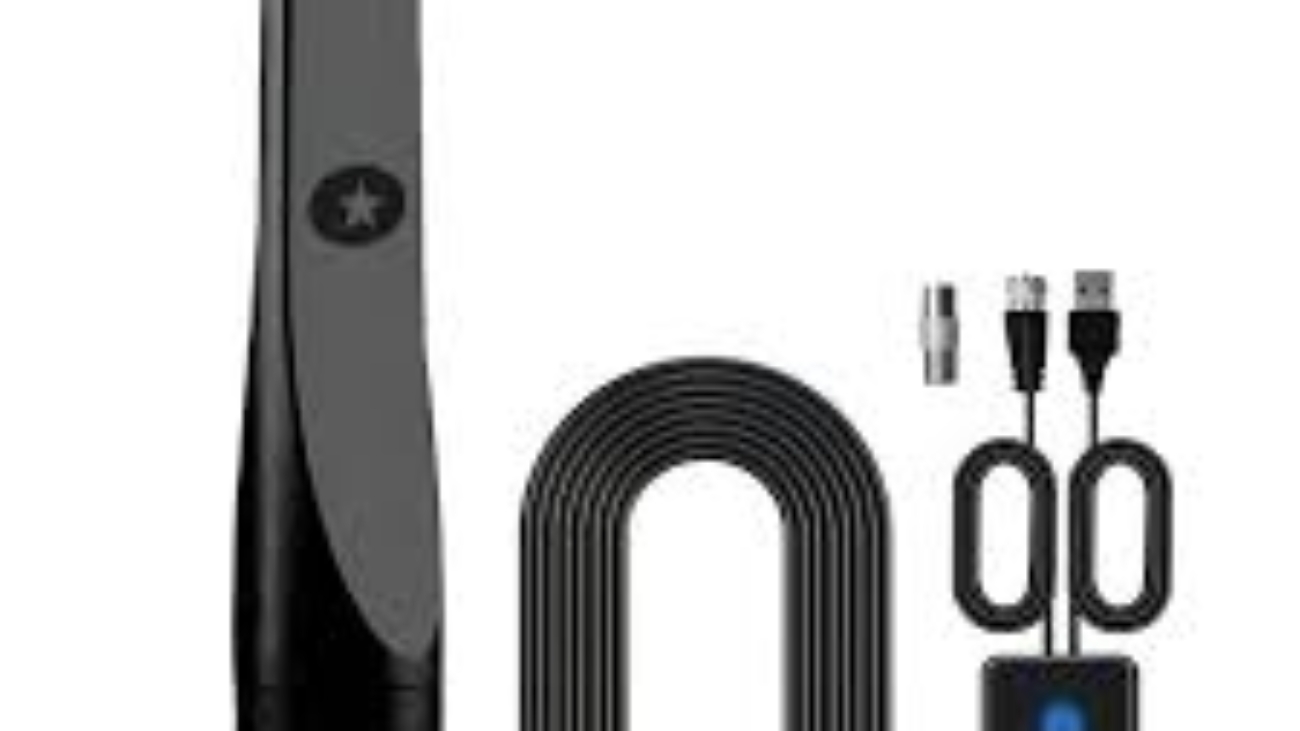
Introduction: Why Millions of Americans Are Ditching Cable
The average American household spends somewhere between $80 and $200 every single month on cable television. Multiply that over a year, and you are looking at up to $2,400 gone — all for channels you may never watch, locked inside bundles you never agreed to. It is no surprise, then, that cord-cutting has become one of the most significant consumer trends of this decade. According to recent industry data, tens of millions of households in the United States have already cut or significantly reduced their cable subscriptions in favor of over-the-air (OTA) broadcasting and streaming alternatives.
Enter the UltraLink TV Antenna — a device that has been generating significant buzz across social media platforms, consumer review sites, and digital advertising channels. Marketed as a compact, plug-and-play antenna capable of delivering over 50 free HD channels with no monthly fees, the UltraLink has attracted both enthusiastic early adopters and skeptical critics.
This article gives you the complete picture. We will walk through exactly what the UltraLink TV Antenna is, how it works, what features it offers, who it is best suited for, and what you can realistically expect from it — all so you can make an informed buying decision.
Quick Reference: UltraLink TV Antenna at a Glance
| Specification | Detail |
|---|---|
| Type | Amplified indoor digital OTA antenna |
| Reception pattern | 360-degree omnidirectional |
| Frequency coverage | VHF + UHF (dual-band) |
| Supported resolutions | 4K, 1080p, 1080i, 720p |
| Broadcast standard | ATSC / ATSC 3.0 ready |
| Setup time | Under 10 minutes |
| Monthly fees | None |
| Contract required | No |
| Best for | Urban and suburban cord-cutters |
| Money-back guarantee | 30 days |
What Is the UltraLink TV Antenna?
The UltraLink TV Antenna is a digital indoor HD television antenna designed to receive free over-the-air broadcast signals from local television stations. It is compatible with all standard televisions — including older analog sets when paired with a digital converter box — and supports high-definition formats including 720p, 1080i, 1080p, and 4K UHD.
At its core, the UltraLink functions exactly like any other digital OTA antenna: it intercepts free broadcast signals transmitted by local TV stations and delivers them directly to your television set via a coaxial cable connection. The difference, according to its makers, lies in the antenna’s signal amplification technology, build quality, and reception range.
The product is sold online through its official website and select affiliate marketplaces, often promoted alongside bold claims about accessing over 100 channels. Before accepting those claims at face value, it is worth understanding how OTA broadcasting actually works — and what any antenna, including UltraLink, can and cannot deliver.
How Over-the-Air TV Broadcasting Works
Before diving into UltraLink’s specific features, it helps to understand the landscape of free television broadcasting.
Television stations across the United States broadcast their signals over the public airwaves using radio frequencies. These broadcasts are completely free and legal to receive with any compatible antenna. The Federal Communications Commission (FCC) mandates that broadcast stations transmit their signals in the public domain, which means no subscription or payment is required to access them.
The channels available to you via OTA broadcasting depend entirely on your geographic location and your proximity to broadcast towers. Major networks — including ABC, CBS, NBC, FOX, PBS, The CW, ION, Univision, and dozens of local affiliates — all broadcast over the air. In densely populated metro areas, it is entirely common to receive 50 or more free channels. In rural or remote areas, the number may be significantly lower.
What any antenna does — including UltraLink — is receive these already-free signals. A better antenna typically means better signal strength, fewer dropped signals, and more channels from towers that are farther away. No antenna, however, can give you cable-exclusive networks like ESPN, HBO, CNN, or Bravo, because those channels are not broadcast over the air. They exist behind subscription paywalls. This is an important distinction that every potential buyer should understand before purchasing any over-the-air antenna.
UltraLink TV Antenna: Key Features and Specifications
360-Degree Omnidirectional Reception
One of the most promoted features of the UltraLink TV Antenna is its 360-degree omnidirectional reception capability. Traditional directional antennas must be physically pointed toward the nearest broadcast tower to function effectively. Omnidirectional antennas, by contrast, can pick up signals from all directions simultaneously.
This makes UltraLink considerably more versatile in terms of placement. Whether you mount it on a window, place it flat on a shelf, hang it on a wall, or position it in an attic or garage, it can capture signals from multiple towers without requiring you to angle or rotate the device. For homes surrounded by broadcast towers at different compass points — as is common in suburban and urban areas — this 360-degree capability is a meaningful practical advantage.
Built-In Signal Amplifier
The UltraLink TV Antenna includes a built-in smart signal amplifier, also referred to as a signal booster. The amplifier’s purpose is to strengthen incoming broadcast signals before they are sent to your television, improving picture clarity and reducing the likelihood of dropouts during adverse weather or when the signal source is at a greater distance.
The amplifier operates across dual frequency bands — typically covering VHF (Very High Frequency) and UHF (Ultra High Frequency) ranges — which is important because different television stations broadcast on different frequency bands. An antenna that only amplifies UHF signals will miss VHF channels entirely, which is a limitation of many cheaper OTA antennas on the market.
Support for 4K, 1080p, and 1080i
The UltraLink is built to support modern broadcast standards. It handles 4K Ultra HD, Full HD 1080p, and 1080i signals without degradation, ensuring that if your television is capable of displaying those formats and your local stations broadcast in those resolutions, you will see the full quality picture. Most major network affiliates in large markets now broadcast in 1080i HD as a standard, with some stations upgrading to ATSC 3.0 — the next-generation broadcast standard that enables 4K HDR and improved mobile reception.
Easy Plug-and-Play Setup
One of the most frequently highlighted aspects of UltraLink’s design is how simple it is to set up. The installation process requires no technical expertise, no tools, and no professional assistance:
- Connect the included coaxial cable from the antenna to your television’s antenna input port.
- Power on your TV and navigate to the settings or input menu.
- Run an automatic channel scan.
- Within minutes, your television will locate and save all available free channels in your area.
The entire process takes under ten minutes for most users. This ease of setup makes UltraLink accessible to older viewers, renters, or anyone who does not want to deal with complicated hardware installation.
Flexible Mounting Options
The UltraLink TV Antenna supports several mounting configurations. It can be attached to windows using suction cups or adhesive strips, laid flat on a tabletop or shelf, mounted vertically on a wall, or positioned in an attic space for improved signal access. Its compact, thin profile means it does not take up significant space and can be positioned discreetly without being an eyesore in your living room or bedroom.
Long Coaxial Cable Included
The product includes a longer-than-average coaxial cable, which gives you flexibility in placing the antenna at the optimal position for signal reception — near a window or on an exterior wall — while keeping the television positioned where it suits your room layout. A longer cable reduces the likelihood of having to rearrange your entire living room just to accommodate antenna placement.
Compatibility with All TV Types
UltraLink is compatible with any television that features a coaxial input (antenna port). This includes modern 4K smart TVs, older HD televisions, and legacy analog sets (when paired with a digital-to-analog converter box). It works with flat-screen televisions, curved displays, and projector setups — essentially any device designed to receive a television signal through a standard coaxial connection.
What Channels Can You Get with UltraLink?
This is the question most people ask — and it deserves a direct, honest answer.
The channels you receive with UltraLink (or any OTA antenna) depend primarily on your location. If you live in or near a major city, you can expect to receive a substantial number of free channels, typically including:
- ABC — News, entertainment, live sports
- CBS — News, dramas, late-night programming
- NBC — Sports, news, primetime dramas
- FOX — Sports, news, reality TV
- PBS — Educational programming, documentaries, arts
- The CW — Drama series, superhero programming
- ION Television — Crime procedurals and family content
- Univision / Telemundo — Spanish-language programming
- MeTV, Decades, Comet — Classic TV and retro programming
- Local news affiliates — Regional weather, traffic, local news
In a major metropolitan area like New York, Los Angeles, Chicago, or Houston, it is realistic to pick up 40 to 70 or more distinct channels using a quality amplified antenna like UltraLink. In smaller cities and suburban areas, the number typically ranges from 15 to 40 channels. In rural areas far from broadcast towers, you may receive as few as 5 to 15 channels, regardless of which antenna you use.
What you will not receive — and what no OTA antenna can deliver — are cable-exclusive channels such as ESPN, CNN, MSNBC, HBO, Bravo, HGTV, or any streaming service. Those require separate subscriptions and internet connectivity. This is not a limitation of UltraLink specifically — it is a fundamental truth about how television broadcasting works.
Real-World Performance: What Users Are Saying
User experiences with the UltraLink TV Antenna vary considerably, and the range of opinions reflects the reality that antenna performance is highly location-dependent.
Positive experiences are most common among users who live within 30 to 50 miles of multiple broadcast towers. These users frequently report clean, clear HD picture quality on major network channels, successful reception of local news and weather without any subscription, and genuine satisfaction with the cost savings compared to cable. Many describe the setup process as quick and genuinely simple. Urban dwellers in particular tend to report excellent results.
Mixed experiences come from users in suburban fringe areas or hilly terrain where signal paths are obstructed. These users often report picking up some channels clearly but experiencing intermittent dropouts or difficulty locking onto weaker signals. In many of these cases, repositioning the antenna — particularly moving it closer to a window or higher on a wall — resolved the issue.
Disappointing experiences tend to occur in two specific scenarios: users who live in remote rural areas far from broadcast infrastructure, and users who expected the antenna to deliver cable channels or streaming content. The former is a genuine technical limitation; the latter is a misunderstanding of what an OTA antenna does. Any user expecting to replace cable with OTA broadcasting should first check a resource like AntennaWeb or TVFool to see what channels are theoretically available from their address before purchasing any antenna.
UltraLink vs. Traditional Cable: A Practical Comparison
To understand the value proposition of UltraLink, it helps to compare it directly against continuing a standard cable subscription.
| Feature | UltraLink TV Antenna | Standard Cable Subscription |
|---|---|---|
| Monthly cost | $0 | $80–$200+ |
| One-time cost | ~$39–$59 | Equipment fees vary |
| Installation | Self-install in minutes | Technician appointment |
| HD quality | Yes (1080p/4K) | Yes (varies by package) |
| Local channels | Yes | Yes |
| Cable-only channels | No | Yes |
| Contract required | No | Often yes |
| Internet required | No | No (for TV) |
| Weather reliability | Good (with amp) | Generally reliable |
For viewers who primarily watch local news, network programming, sports on broadcast networks, and PBS content, the UltraLink antenna can be a complete cable replacement. For viewers who regularly watch cable-exclusive content, it is better understood as a supplement to a streaming service like Hulu Live, YouTube TV, or a lower-tier streaming bundle — not a full cable substitute.
The financial math is compelling either way. At a one-time cost of approximately $39–$59, the UltraLink pays for itself within the first month compared to even the most basic cable package. Over the course of a year, a household that fully replaces cable with UltraLink and a $15/month streaming service could realistically save between $800 and $1,500 annually.
UltraLink TV Antenna vs. Other OTA Antennas on the Market
The OTA antenna market is competitive, with dozens of products available at similar price points. Understanding where UltraLink sits in this landscape helps contextualize its value.
Entry-level passive antennas (typically $10–$20) offer no signal amplification and are suitable only for areas within 20–25 miles of broadcast towers with a clear line of sight. They are inexpensive but limited in range and reliability.
Mid-range amplified antennas (typically $25–$50) — the category UltraLink falls into — include signal boosters that extend effective reception range to 30–100 miles under good conditions. They support HD and increasingly 4K reception, are suitable for both indoor and outdoor use in many cases, and include longer coaxial cables. UltraLink competes directly in this tier.
Premium outdoor antennas ($60–$150+) are mounted externally on rooftops or exterior walls and offer the best possible range and signal strength. They require more involved installation but deliver superior performance in difficult reception environments, including rural areas and hilly terrain.
For most urban and suburban users who do not want to deal with rooftop installation, a quality amplified indoor antenna like UltraLink represents the best balance of performance, convenience, and cost. The key differentiator among mid-range antennas is build quality, amplifier design, and whether the antenna covers both VHF and UHF frequency ranges — the UltraLink does cover both, which gives it an advantage over antennas that only address UHF bands.
Frequently Asked Questions About UltraLink TV Antenna
Does the UltraLink TV Antenna work with smart TVs?
Yes. UltraLink works with any television that has a coaxial antenna input, including all modern smart TVs. Simply connect the coaxial cable to the antenna port, run a channel scan through your TV’s settings, and you are ready to watch.
Does UltraLink require an internet connection?
No. OTA broadcasting requires no internet connection whatsoever. Broadcast signals are received through the air and processed entirely by your television’s built-in tuner. This makes UltraLink an excellent choice for areas with unreliable internet service and for users who want a completely independent TV viewing option.
Can I use one UltraLink antenna for multiple TVs?
Yes, but with a caveat. To use one antenna with multiple televisions, you will need a coaxial signal splitter. Each time you split the signal, there is some reduction in signal strength delivered to each TV. A two-way split is generally manageable with a good amplified antenna. For three or more televisions, a distribution amplifier is recommended to maintain strong signal levels at every set.
How many channels will I actually get?
The number varies entirely based on your location. To get a realistic estimate before buying, visit AntennaWeb.org or use the FCC’s DTV Reception Maps tool. Enter your address, and you will see exactly which channels are theoretically receivable from your home. In major cities, 40–70+ channels is realistic. In suburban areas, 20–40 channels is typical. In rural areas, the number may be significantly lower.
Is over-the-air broadcasting legal?
Absolutely and completely. OTA broadcasting was established decades ago as a free public service. Broadcasters are licensed by the FCC to transmit their signals over the public airwaves, and any member of the public is legally entitled to receive those signals with an antenna. There are no gray areas, no loopholes, and no legal concerns associated with receiving OTA broadcasts.
Does UltraLink work during bad weather?
An amplified antenna like UltraLink generally handles moderate weather conditions — including cloud cover and light rain — without significant degradation. Severe weather events like thunderstorms or heavy snow can briefly disrupt signal reception on some channels. For comparison, satellite television is actually more weather-sensitive than OTA broadcasting, and cable television is generally the least weather-sensitive option.
What is ATSC 3.0, and does UltraLink support it?
ATSC 3.0 (also marketed as NextGen TV) is the next generation broadcast standard that enables 4K HDR picture quality, improved audio, and mobile reception. Broadcasters in major cities have begun transitioning to ATSC 3.0 transmissions. An antenna labeled “ATSC 3.0 Ready” — which the UltraLink supports — is designed to receive the frequencies used for ATSC 3.0 broadcasts. However, to actually decode the 4K HDR content, your television also needs a compatible ATSC 3.0 tuner. Most televisions currently on the market still use ATSC 1.0 tuners, meaning you would need a separate ATSC 3.0 converter box to take full advantage of next-gen picture quality.
What is the difference between indoor and outdoor installation for UltraLink?
The UltraLink is primarily designed as an indoor antenna but is rated for outdoor or semi-outdoor use as well. Indoor placement is simplest and most common — typically on a windowsill, high on a wall, or in an attic. Outdoor or elevated placement generally improves signal reception, as exterior walls and rooflines can attenuate broadcast signals. If you live in a challenging reception area, placing the UltraLink in your attic or on an external wall (in a weatherproof location) may meaningfully increase the number of channels you receive.
Can I use UltraLink with an older non-HD television?
Yes, provided you use a digital-to-analog converter box between the antenna and the television. All broadcast television in the United States now uses a digital signal format. Older analog-only televisions cannot process digital signals directly, but a $25–$40 converter box bridging the gap allows any TV to display digitally broadcast channels.
Tips for Getting the Best Performance from Your UltraLink Antenna
Getting the most out of any OTA antenna — including UltraLink — involves a few practical steps beyond simply plugging it in.
Placement matters enormously. Broadcast signals travel in straight lines and can be blocked by walls, metal structures, trees, and hills. The single most impactful thing you can do is experiment with placement. Start near a window facing the direction of the nearest broadcast towers. Higher placement generally yields better results than lower placement. Second-floor placement almost always outperforms ground floor for indoor antennas.
Run multiple channel scans. After moving the antenna to a new position, always run a fresh automatic channel scan. Your television stores the scan results from whichever position the antenna was in when the scan was performed. Rescanning after repositioning ensures you are capturing every available channel from the new location.
Check for local signal obstructions. If you live in a valley, in a dense urban canyon surrounded by tall buildings, or in a heavily forested area, signal reception will be more challenging regardless of your antenna quality. In these environments, placing the antenna as high and as close to an exterior window as possible becomes even more important.
Use a quality coaxial cable. The cable connecting your antenna to your TV matters. The included cable with UltraLink is designed to deliver reliable signal transmission, but if you need a longer run — for example, routing the cable from a rooftop antenna down to a basement TV — ensure you are using a quality RG-6 coaxial cable, which minimizes signal loss over distance.
Keep the amplifier powered. The UltraLink’s built-in amplifier requires power (usually delivered via USB or a small power adapter). Ensure the amplifier is powered on for best signal performance. An unpowered amplifier can actually degrade signal performance compared to a simple passive antenna.
Is the UltraLink TV Antenna Worth Buying?
Whether UltraLink is the right purchase depends on who you are and what you are trying to accomplish.
UltraLink is an excellent choice if:
- You live in or near a city or suburban area with good broadcast coverage.
- You are primarily interested in network TV, local news, sports on broadcast channels, and PBS.
- You want to eliminate or significantly reduce your cable bill.
- You are supplementing a streaming service and just need local channels.
- You value a simple, fast, no-contract setup.
UltraLink may not fully meet your needs if:
- You live in a remote rural area far from broadcast towers.
- Your primary TV viewing centers on cable-only channels like ESPN, HGTV, CNN, or premium movie channels.
- You are in a heavily obstructed environment where any OTA antenna struggles to perform.
For the right user profile — and millions of Americans fit this description — UltraLink delivers genuine, measurable value. The ability to watch ABC, CBS, NBC, FOX, PBS, and dozens of local channels in HD quality, with zero monthly fees and a one-time investment of under $60, is a legitimately compelling proposition.
Understanding the Cord-Cutting Landscape in 2026
The cord-cutting movement has accelerated dramatically in recent years. What began as a niche preference among tech-savvy early adopters has become a mainstream consumer behavior. The driving forces are clear: cable prices have continued to rise, streaming services have multiplied to fill the content gap, and the quality of free OTA broadcasting has improved significantly with the rollout of HD and the gradual transition to ATSC 3.0.
For cord-cutters, the typical setup looks something like this: an OTA antenna for local broadcast channels, combined with one or two carefully chosen streaming services (perhaps one for entertainment content and another for live sports). The combined monthly cost of this approach is often between $15 and $40 — a fraction of a traditional cable bill.
UltraLink slots neatly into this ecosystem as the OTA component. It handles everything that is broadcast freely over the air, leaving streaming services to cover whatever cable-exclusive content you want to add. This hybrid approach has become the dominant cord-cutting strategy, and UltraLink is designed precisely to serve it.
Conclusion: The UltraLink TV Antenna in Summary
The UltraLink TV Antenna is a solid, amplified indoor digital antenna that does what it is designed to do: receive free over-the-air broadcast signals in HD quality, with minimal setup complexity and no ongoing costs. Its 360-degree omnidirectional design, dual-band amplification, 4K and 1080p support, and flexible mounting options make it a competitive choice in the mid-range OTA antenna market.
What it cannot do — and what no OTA antenna can do — is deliver cable-only channels or streaming content. Buyers who understand this distinction and approach UltraLink as a cable-replacement tool for broadcast television will be rewarded with genuine value and a meaningful reduction in their monthly entertainment costs.
For millions of households considering the transition away from expensive cable contracts, the UltraLink TV Antenna offers a practical, immediate, and cost-effective starting point. At roughly $39–$59 with a 30-day money-back guarantee, the barrier to entry is low and the potential upside is substantial. Before your next cable bill arrives, it may be worth giving UltraLink a try.