
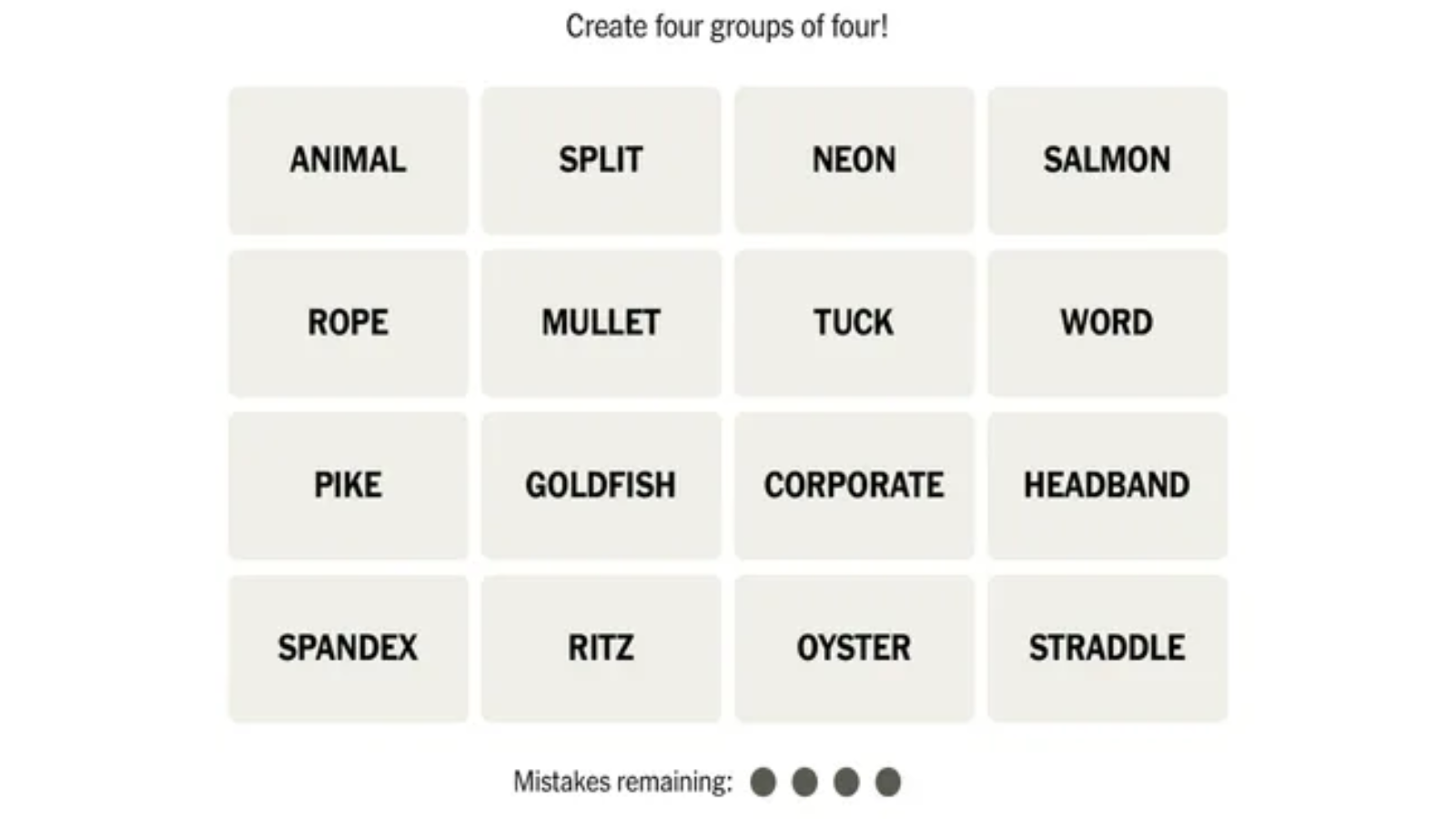
Word puzzle games continue to attract millions of players worldwide, and NYT Connections has quickly become one of the most popular daily brain teasers. Unlike traditional crossword puzzles or word guessing games, Connections challenges players to identify hidden relationships between seemingly unrelated words.
Whether you’re playing for the first time or trying to improve your winning streak, understanding the game’s rules and learning a few simple strategies can significantly increase your chances of solving each puzzle.
What Is NYT Connections?
NYT Connections is a daily word puzzle where players are presented with 16 words arranged in a grid. The objective is to sort those words into four groups of four, with each group sharing a hidden connection or common theme. These connections can range from straightforward categories like colors or animals to more challenging patterns involving wordplay, phrases, or multiple meanings.
Every puzzle is unique, requiring players to think critically rather than relying solely on vocabulary.
How the Game Works
Each puzzle follows the same basic format:
- A grid displays 16 different words.
- Your task is to identify four words that belong together.
- Select the four words and submit your guess.
- If your selection is correct, the group is locked in.
- Continue until all four categories have been found.
Players are allowed up to four incorrect guesses before the puzzle ends, making careful observation more important than quick guessing.
Understanding the Difficulty Colors
Once a category is solved, it is revealed with a color indicating its difficulty.
🟡 Yellow
The easiest category, usually involving obvious themes or common groupings.
🟢 Green
Slightly more challenging, requiring a bit more thought.
🔵 Blue
Often involves more specific knowledge or less obvious relationships.
🟣 Purple
The hardest category, frequently based on wordplay, hidden meanings, prefixes, suffixes, or common phrases.
Tips to Solve Connections More Consistently
1. Read Every Word First
Avoid selecting words immediately. Spend a few moments scanning the entire board before making your first guess.
2. Find the Most Obvious Group
Look for categories that stand out clearly, such as:
- Fruits
- Countries
- Sports
- Musical instruments
- Months
- Colors
Solving one group often makes the remaining words much easier to organize.
3. Watch Out for Trap Words
Many puzzles include words that appear to fit multiple categories. These “decoy” words are intentionally designed to mislead players.
For example, a word could belong to both a movie title and a color-related phrase, making careful analysis essential.
4. Think Beyond Dictionary Meanings
Not every category is based on literal definitions.
Sometimes the connection involves:
- Famous sayings
- Movie titles
- Song names
- Abbreviations
- Prefixes
- Suffixes
- Homophones
- Hidden words
Thinking creatively often reveals the correct grouping.
5. Save the Hardest Words for Last
If several words seem ambiguous, focus on solving the more obvious categories first. Eliminating confirmed groups reduces confusion and helps uncover the remaining connections.
Common Mistakes Beginners Make
Many new players struggle because they:
- Guess too quickly.
- Focus on only one possible meaning of a word.
- Ignore words that fit multiple themes.
- Waste guesses on uncertain groups.
- Assume every category is based on literal definitions.
Developing patience and checking every possible relationship before submitting a guess can dramatically improve success rates.
Why Is NYT Connections So Popular?
The game appeals to players because it combines several mental skills:
- Vocabulary
- Pattern recognition
- Logic
- General knowledge
- Lateral thinking
Unlike many daily puzzles, every game encourages players to discover hidden relationships rather than simply recalling facts. This makes each puzzle feel fresh and rewarding.
Strategies for Advanced Players
Once you’re comfortable with the basics, try these advanced techniques:
- Rearrange the words mentally to identify new patterns.
- Look for overlapping themes before making a selection.
- Consider whether a word has multiple meanings.
- Keep the hardest (purple) category until the end whenever possible.
- If a guess is “one away,” identify which word is the weakest fit rather than rebuilding the entire group.
Benefits of Playing Word Puzzle Games
Regularly solving word puzzles can help improve:
- Vocabulary
- Memory
- Logical reasoning
- Concentration
- Pattern recognition
- Cognitive flexibility
Many players also enjoy the daily challenge as a relaxing mental exercise.
Final Thoughts
NYT Connections is more than just another word game. Its clever mix of logic, vocabulary, and creative thinking makes it both challenging and highly addictive. While beginners may find some puzzles difficult at first, learning the rules and applying a structured solving strategy can quickly improve performance.
Start by identifying the easiest groups, avoid rushing your guesses, and remember that some categories rely on clever wordplay rather than obvious definitions. With consistent practice, you’ll become faster at spotting hidden connections and solving the daily puzzle with confidence.
Frequently Asked Questions
Is NYT Connections free to play?
Yes. A daily puzzle is available online, allowing players to complete one new challenge each day.
How many mistakes are allowed?
Players can make up to four incorrect guesses before the puzzle ends.
What do the colors mean?
The colors represent difficulty levels:
- Yellow – Easiest
- Green – Moderate
- Blue – Challenging
- Purple – Most difficult, often involving wordplay.
What is the best strategy for beginners?
Read all 16 words first, identify the most obvious category, avoid guessing too quickly, and leave ambiguous words until later.
Does every puzzle have the same structure?
Yes. Each daily puzzle contains 16 words that must be grouped into four sets of four connected words, but the themes and categories change every day.